
Wearable Lactate Threshold Sensors vs. Heart Rate Zones: Real-Time Muscle Oxygenation
📍 Verified Local Showcase · Shoeburyness, Essex
Overview: Precision Pacing and Physiological Feedback
For decades, dedicated runners, cyclists, and triathletes have structured their endurance training around heart rate zones to govern marathon pacing and threshold efforts. While traditional cardiac monitoring offers a foundational benchmark, it is frequently hindered by cardiac drift, hydration fluctuations, and delayed responses during intense intervals. Emerging wearable lactate threshold sensors and near-infrared spectroscopy (NIRS) devices bypass these limitations by tracking real-time muscle oxygenation (SmO2) directly within working muscle fibres, providing an immediate window into working physiology.
Key Science: Real-Time Muscle Oxygenation vs Heart Rate
Heart rate is essentially a downstream, systemic metric; it reflects the cardiovascular system attempting to meet demand rather than measuring the exact muscular effort as it happens. By contrast, wearable muscle oxygenation sensors assess the precise balance between local oxygen delivery and consumption within active quadriceps or calves. This instantaneous feedback enables athletes to identify the true lactate threshold inflection point before heart rates elevate.
- Zero Latency: Identify precise anaerobic shifts instantaneously without waiting for systemic cardiovascular lag.
- Actionable Zone Calibration: Refine interval paces by pinpointing true functional thresholds rather than estimated percentage brackets.
- Dynamic Recovery Tracking: Monitor muscle reoxygenation kinetics during interval recoveries to determine optimal work-to-rest ratios.
- Fatigue Detection: Recognise systemic muscular exhaustion early, allowing you to adapt pacing during demanding endurance sessions.
Final Verdict & Training Takeaways
Integrating real-time muscle oxygenation monitoring alongside established heart rate data empowers endurance athletes to eliminate guesswork and prevent premature fatigue. Whether preparing for an autumn marathon or executing high-cadence track repetitions, leveraging muscle oxygen metrics ensures every training kilometre delivers maximum aerobic adaptation. Explore our related training guides, leave your comments below, and discover more performance-led insights across Sundried.com.
Project Story & Technical Breakdown
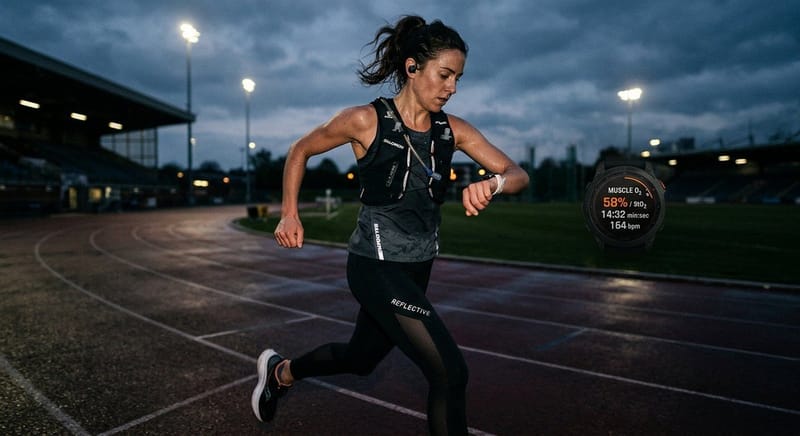
Captured beneath the floodlights on an evening track session, an endurance runner monitors real-time physiological metrics via a specialised sports watch display. Indicating a muscle oxygen saturation (SmO2) of 58% alongside a heart rate of 164 bpm, the readout demonstrates the immediate diagnostic power of wearable lactate and oxygenation sensors over traditional delayed cardiac data.