
Waxed Chains vs. Drip Lubricants: Watt Savings, Friction Reduction, and Maintenance Rules
📍 Verified Local Showcase · Shoeburyness, Essex
Overview & Objective
In competitive road cycling and endurance triathlon, athletes invest heavily in aerodynamic frames, lightweight wheelsets, and structured training programmes. However, considerable performance advantages often hinge on mechanical efficiency at the drivetrain. The ongoing technical choice between hot-melt chain waxing and standard drip lubricants directly impacts frictional resistance, drivetrain longevity, and sustained power transfer over extended distances.
Key Science & Practical Tips
Traditional drip lubricants remain convenient for mid-season top-ups, but their wet composition naturally collects fine dust and airborne grit. Over successive training rides, this debris forms an abrasive paste that accelerates cassette wear and drains valuable watts. By contrast, submerged wax immersion thoroughly coats internal chain rollers with low-friction paraffin, solidifying into a clean barrier that repels road grime entirely.
Final Verdict & Key Takeaways
For endurance athletes focused on maximising energy return, adopting a dedicated waxed chain strategy provides measurable watt savings and pristine equipment maintenance. While traditional drip lubricants still serve quick-fix scenarios, hot-melt wax remains the premier choice for serious road and time-trial performance. Explore our collection of detailed training guides, leave a comment below with your drivetrain setup, and read more endurance sports insights on Sundried.com.
Project Story & Technical Breakdown
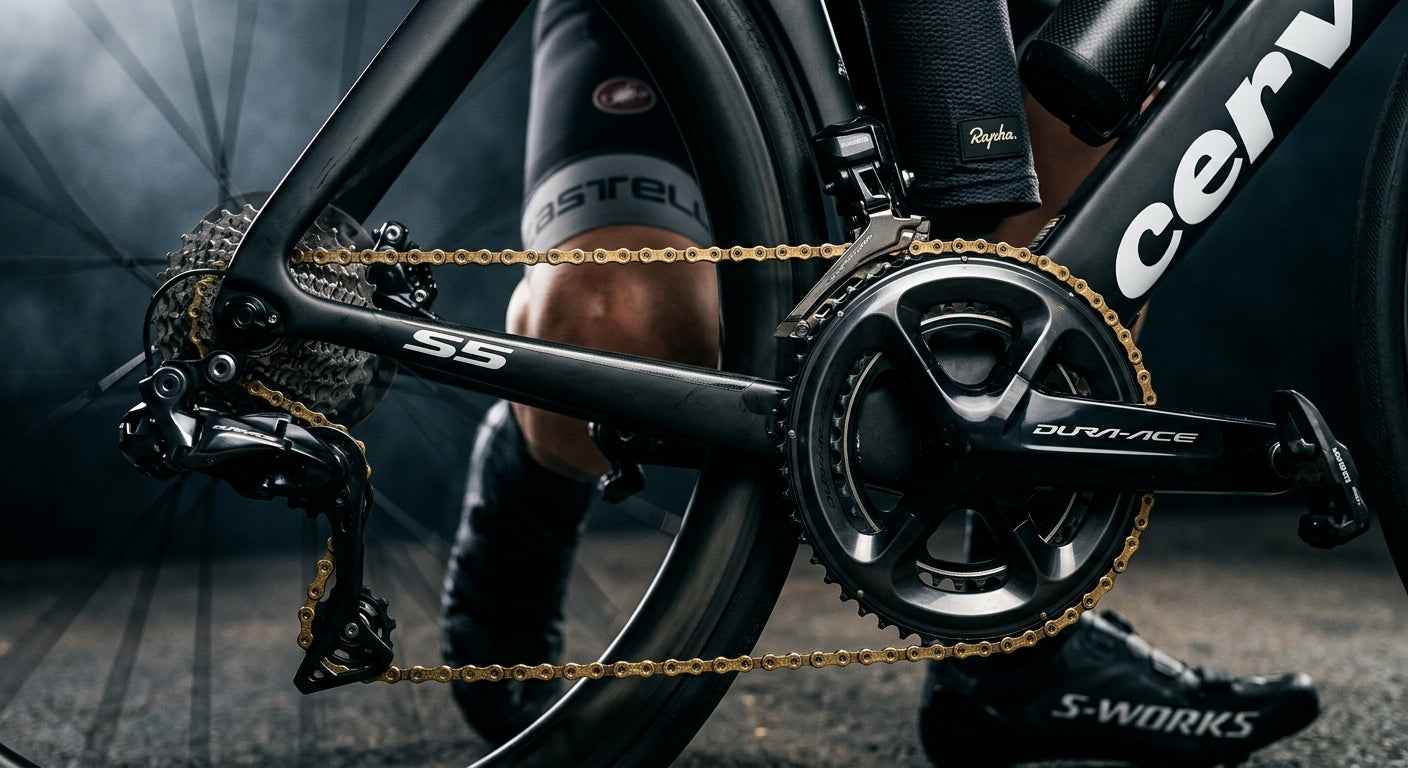
A meticulous close-up reveals a Cervélo S5 road bike fitted with a precision Shimano Dura-Ace groupset and an immaculate gold chain. The spotless drivetrain demonstrates the dramatic aesthetic and friction-reducing benefits of wax lubrication, eliminating dark oily grime to ensure frictionless power delivery on tarmac.