
Mastering Winter Training: Polypropylene vs. Merino Wool Base Layers
📍 Verified Local Showcase · Shoeburyness, Essex
Mastering Winter Thermoregulation: Fabric Science
Winter endurance training demands uncompromising moisture management and thermal stability. When pushing through long tempo runs or brisk road cycling intervals in cold conditions, your base layer acts as your primary defence against excessive chill and sweat accumulation. The fundamental choice for cold-weather performance typically centres on two primary technical textiles: polypropylene synthetic fibres and natural merino wool. Understanding how each fabric manages moisture vapour, retains heat, and performs under high aerobic exertion is vital to optimise your winter training programme.
Technical Comparison: Synthetic vs. Natural Fibres
Polypropylene excels in rapid moisture evacuation due to its virtually non-absorbent, hydrophobic properties, forcing perspiration outwards before it chills against the skin during high-intensity intervals. Conversely, merino wool naturally traps warmth within its crimped fibres, offering superior insulation even when damp, alongside inherent odour resistance for extended multi-hour efforts. Choosing between them depends on your planned session intensity and ambient conditions:
- Polypropylene: Best for high-tempo sessions, track speedwork, and damp conditions where rapid moisture wicking and ultra-fast drying are imperative.
- Merino Wool: Optimal for steady zone 2 aerobic base miles, cold sub-zero rides, and extended multi-hour endurance challenges.
- Hybrid Layering: Combine a lightweight synthetic mesh underneath a merino mid-layer to achieve unmatched sweat expulsion and core thermal retention.
Selecting the Optimal Winter Base Layer
Ultimately, your gear choice hinges on your specific physiological output. Runners undertaking intense interval blocks will appreciate the lightweight breathability of polypropylene, whilst cyclists exposed to prolonged wind chill benefit tremendously from the sustained warmth of merino. To refine your cold-weather kitbag and discover more expert guidance on road cycling gear, marathon pacing, and transition management, explore our comprehensive endurance training guides on Sundried.com.
Project Story & Technical Breakdown
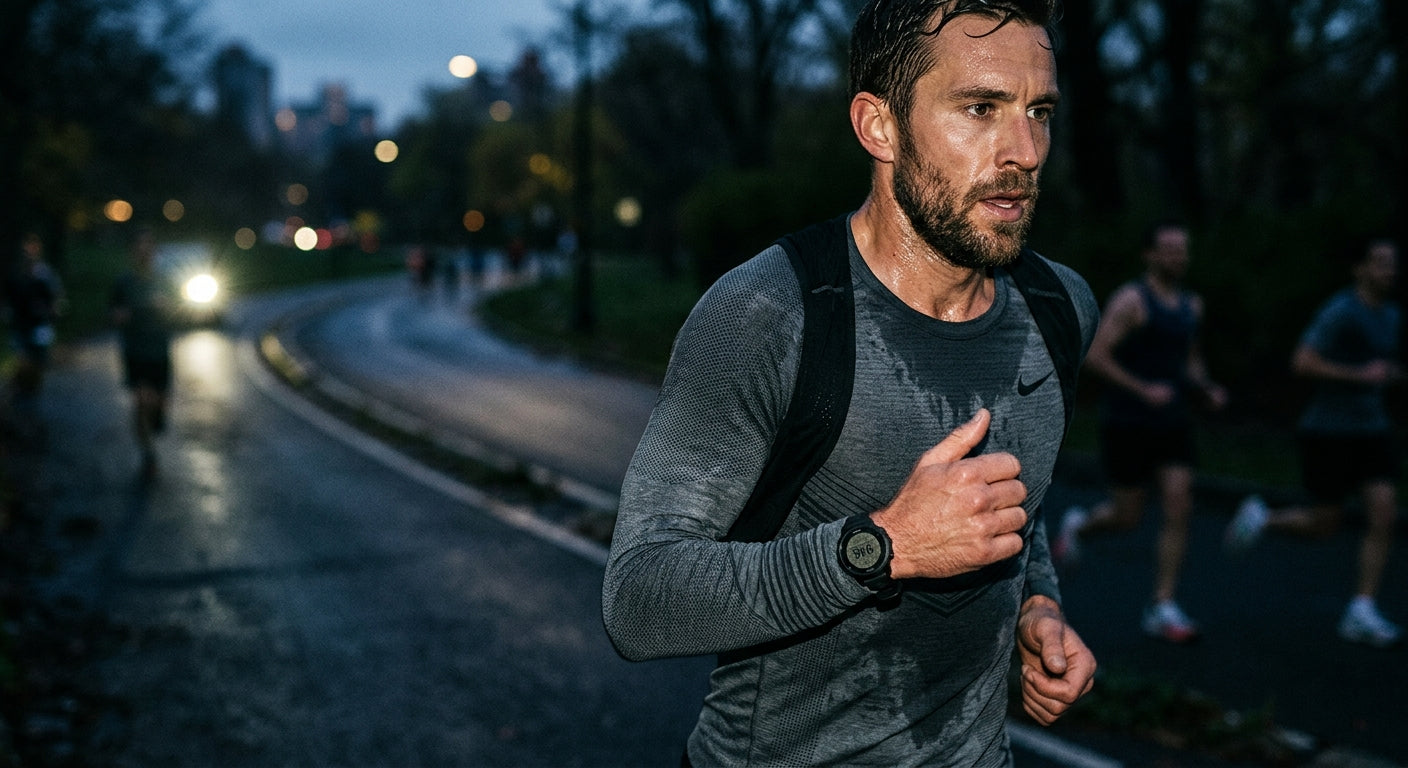
Braving low temperatures and damp evening roads, this dedicated runner relies on high-performance moisture-wicking apparel to maintain optimal core thermal regulation. Quality base layers transfer perspiration away from skin during intense threshold efforts, proving essential for preventing post-effort chill throughout demanding British winter training sessions.