
Osmolality and Tonicity Masterclass: Hypertonic vs Isotonic vs Hypotonic Drinks for Cyclists
📍 Verified Local Showcase · Shoeburyness, Essex
Understanding Osmolality and Tonicity on the Bike
Nutrition and hydration on the bike are far more nuanced than simply mixing squash into a bidon. For endurance cyclists tackling long road routes or severe mountain passes, understanding fluid tonicity—the effective osmotic pressure gradient between a sports drink and your body's bloodstream—is critical to optimising performance. Drink solutions fall into three distinct physiological categories based on their concentration of dissolved particles: hypotonic, isotonic, and hypertonic. Matching the correct formulation to your ride intensity and sweat rate prevents dehydration whilst safeguarding against gastrointestinal distress.
Choosing the Right Mix for Your Ride Intensity
Each formulation serves a specialised physiological purpose during endurance training and competitive sportives:
- Hypotonic Solutions: Possess a lower solute concentration than human blood, promoting ultra-rapid gastric emptying and rapid fluid absorption during high-heat, high-sweat training sessions.
- Isotonic Drinks: Balance carbohydrate delivery with hydration by matching the osmolality of natural body fluids, supplying steady fuel across standard road rides lasting between one and three hours.
- Hypertonic Blends: Contain high concentrations of carbohydrates and electrolytes, making them ideal for rapid post-ride glycogen replenishment or cold-weather training where fluid loss is minimal.
Optimising Your Endurance Nutrition Strategy
Mismatched fueling programmes frequently trigger nausea, severe cramping, and sudden energy slumps along gruelling endurance courses. By tailoring your bottle contents to ambient weather conditions, ride duration, and target wattage, you ensure your body absorbs vital carbohydrates efficiently without pulling necessary water back into the gut. To refine your complete nutritional strategy and explore further sports science guides, read more endurance training content on Sundried.com.
Project Story & Technical Breakdown
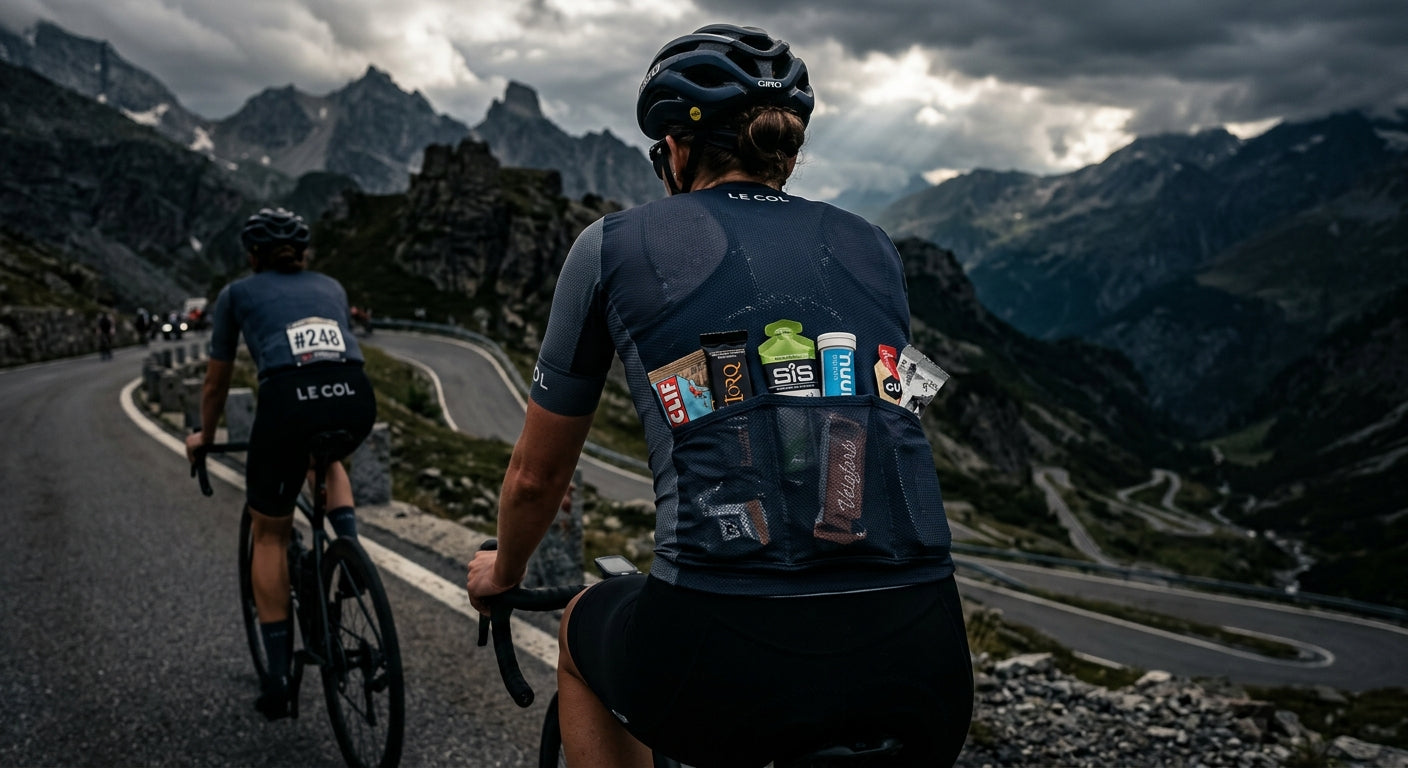
Ascending severe alpine gradients demands meticulous nutritional planning. Captured during a gruelling mountain stage, this rider's jersey pockets showcase an array of energy gels, chew bars, and hydration tabs. Managing fluid osmolality and carbohydrate intake on long ascents ensures peak physiological output while preventing debilitating gastrointestinal distress.