
Mechanical vs. Hydraulic Disc Brakes: What to Choose for Your Next Big Adventure
📍 Verified Local Showcase · Shoeburyness, Essex
Stopping Power and Reliability: The Braking Dilemma
When preparing for your next cycling expedition or endurance ride, few components impact your control and confidence like your braking system. Disc brakes have become the standard across gravel, road, and mountain biking disciplines, offering superior stopping force in adverse weather conditions. However, endurance athletes frequently face a critical question: should you opt for cable-actuated mechanical disc brakes or fully sealed hydraulic systems when venturing into remote terrain?
Performance, Modulation, and Trailside Maintenance
The distinction between these two braking technologies centres on hydraulic fluid dynamics versus mechanical cable tension. While both systems outperform traditional rim brakes on wet roads and muddy singletracks, their functional trade-offs become starkly evident over long-distance routes:
- Hydraulic Braking Systems: Utilise closed mineral oil or DOT fluid lines to deliver immense stopping power, lighter lever action, and self-adjusting pads that optimise modulation on steep descents.
- Mechanical Disc Brakes: Rely on conventional steel cables, making them exceptionally easy to repair in the field with basic multi-tools, though requiring frequent manual pad adjustments.
- Weather & Grit Resilience: Sealed hydraulic lines prevent contamination from grime and moisture, whereas mechanical cables can suffer from grit intrusion and cable stretch over high-mileage tours.
Final Verdict & Adventure Recommendations
For racers seeking razor-sharp modulation and minimal hand fatigue during long downhill sections, hydraulic disc brakes are unmatched. Conversely, self-supported adventure cyclists crossing remote regions often favour mechanical setups for their simplicity and roadside repairability. To discover more expert gear comparisons, maintenance advice, and endurance training insights, explore the full range of guides available on Sundried.com.
Project Story & Technical Breakdown
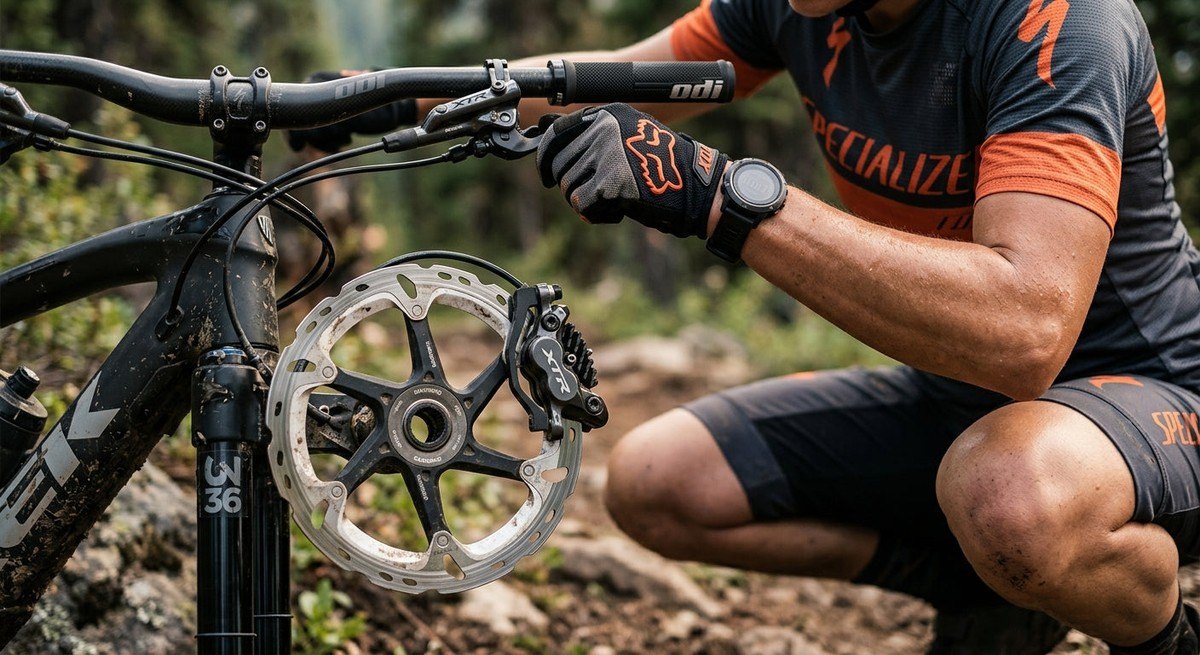
A mountain biker pauses on rugged terrain to inspect a high-performance disc brake caliper and rotor assembly. Reliable stopping power is paramount when navigating steep technical descents or embarking on multiday bikepacking expeditions, where choosing between hydraulic precision and mechanical serviceability can make all the difference.