
Mastering the 100km Triathlon Distance: Pacing and Nutrition Strategies for T100 Racers
📍 Verified Local Showcase · Shoeburyness, Essex
Overview & Demands of the T100 Distance
The 100km triathlon format—combining a 2km swim, 80km bike leg, and an 18km run—bridges the high intensity of Olympic distance racing with the endurance required for middle-distance events. To excel across this unique distance, athletes must establish a disciplined pacing strategy and an aggressive yet digestible fuelling protocol. Tackling the T100 demands precise physiological management from the opening swim stroke right through to the final transition.
Pacing Protocols & Nutrition Execution
Pacing the 80km cycle requires disciplined power output to prevent early glycogen depletion before the 18km run. On-bike nutrition serves as the primary window to consume carbohydrates and electrolytes, laying the foundation for sustained energy. Consider these core execution principles when preparing your race plan:
- Aerobic Efficiency: Maintain steady Zone 3 wattage during the bike section to preserve leg freshness for the run.
- Targeted Carbohydrate Intake: Aim for 60 to 90 grams of carbohydrates per hour on the bike using specialised gels and drink mixes.
- Hydration & Electrolytes: Replenish sodium losses systematically, especially in warm conditions, to maintain muscular function.
- Progressive Run Pacing: Start the 18km run conservatively for the first three kilometres before settling into race rhythm.
Final Verdict & Training Insights
Mastering the 100km triathlon is ultimately a test of execution as much as fitness. By dialling in your race-day nutrition and refusing to overcook the bike segment, you set yourself up for a fast, resilient finish. Explore our full collection of triathlon training guides and performance apparel on Sundried.com to elevate your next race campaign.
Project Story & Technical Breakdown
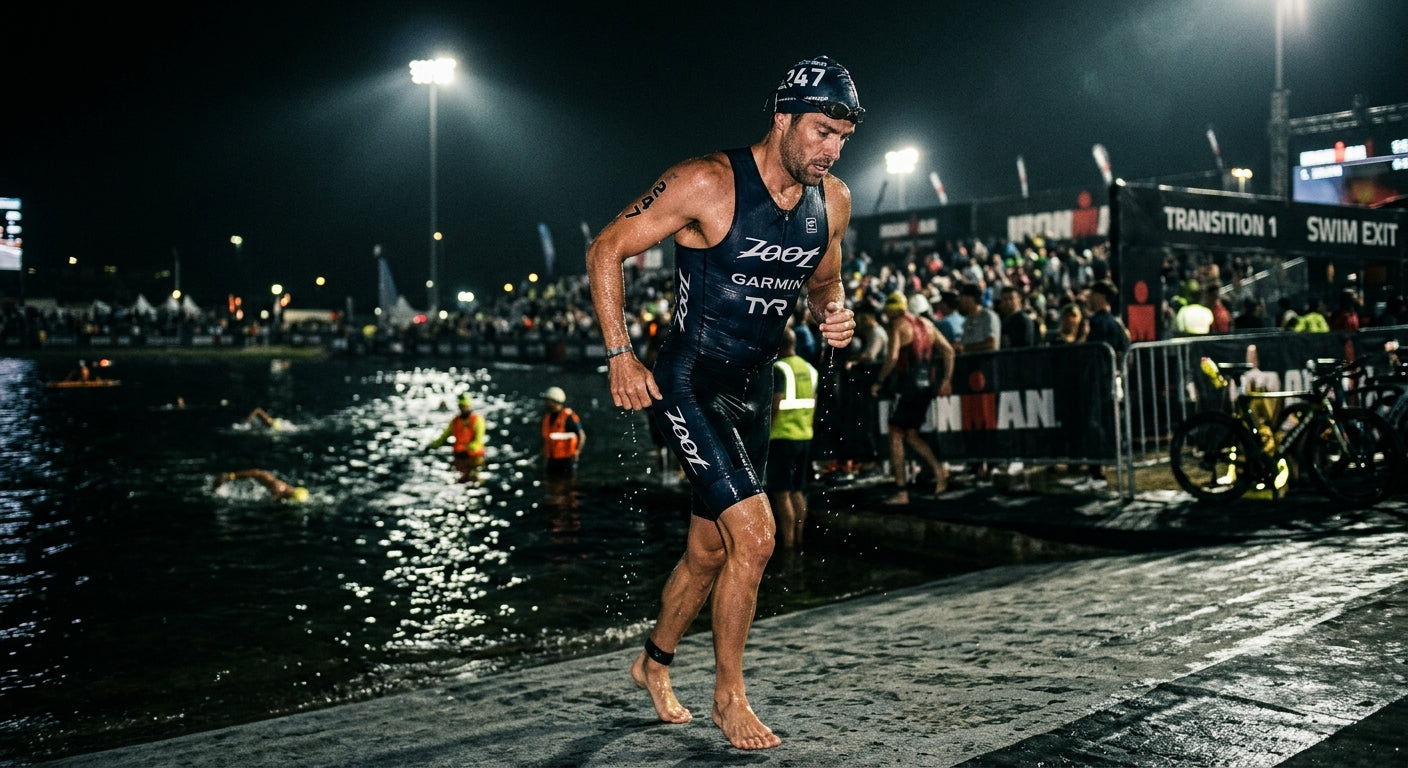
Under the glow of stadium floodlights, an endurance triathlete powers through the swim-to-bike transition ramp. Executing seamless transitions while maintaining optimal energy levels is crucial for conquering the demanding 100km race format, where balanced pacing across the swim, bike, and run determines overall success.