
Ergometer Damper Settings Demystified: Optimizing SkiErg and Rowing Resistance in HYROX
📍 Verified Local Showcase · Shoeburyness, Essex
Overview & Objective
In high-intensity multi-discipline events like HYROX, pacing strategy and mechanical efficiency dictate your overall race performance. A widespread mistake amongst athletes tackling the SkiErg and rowing machine stations is setting the damper lever to ten, assuming higher resistance automatically translates to a faster split. In reality, ergometer damper settings adjust airflow into the flywheel housing rather than increasing muscular resistance like a traditional weight stack. Optimising your damper setting is vital to preserve valuable leg and shoulder drive for the gruelling running intervals ahead.
Key Science & Practical Tips
Ergometers rely on aerodynamic resistance; higher damper settings admit more air, causing the flywheel to decelerate rapidly between strokes, requiring heavier muscular torque to accelerate again. For HYROX athletes, sustaining high stroke cadence with lower muscular demand helps safeguard your central nervous system and maintains an efficient aerobic state. When dialling in your machine setup, focus on the following protocols:
- Target Drag Factor: Aim for a damper setting between 4 and 6 on both the rower and SkiErg, which typically mirrors a drag factor of 120 to 135.
- Cadence Over Force: Maintain a steady stroke rate of 35–42 strokes per minute on the SkiErg and 26–30 strokes per minute on the rower.
- Pre-Race Verification: Check the electronic monitor menu to confirm machine drag factors during warm-ups rather than trusting arbitrary lever positions.
Final Verdict & Key Takeaways
Mastering your damper settings ensures you convert raw aerobic capacity into sustained split times without premature lactic buildup. Finding the sweet spot allows you to conserve vital energy for the subsequent sled push, burpee broad jumps, and wall balls. To fine-tune your competition strategy further, explore our related training guides, leave your questions in the comments below, or discover more endurance training insights on Sundried.com.
Project Story & Technical Breakdown
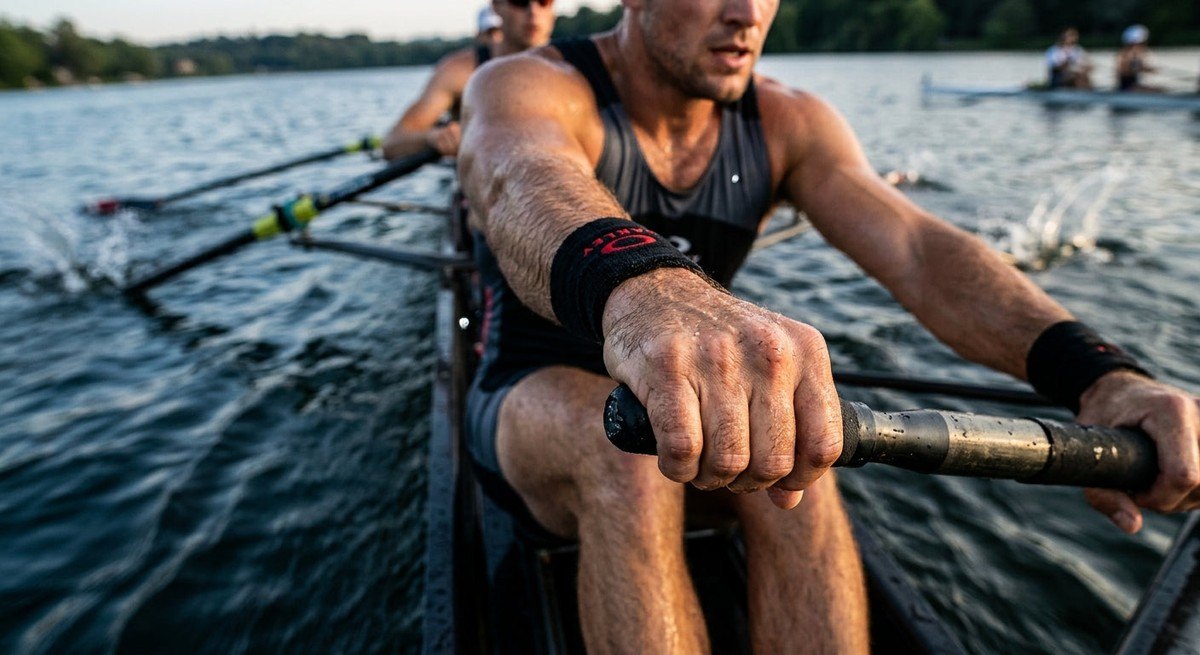
Capturing the raw power and rhythm of competitive rowing on open water, this image showcases the critical connection between athlete mechanics, grip tension, and continuous stroke power. Translating this efficient power transfer onto indoor ergometers like the SkiErg and rower is fundamental for excelling in demanding multi-discipline events such as HYROX.