
The 50mm+ Gravel Tire Revolution: Clearance, Rolling Resistance, and Frame Aerodynamics
📍 Verified Local Showcase · Shoeburyness, Essex
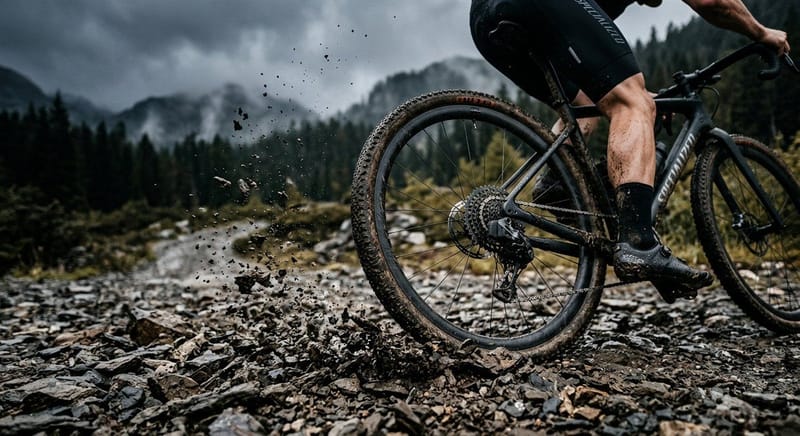
Overview & Objective: The Shift to 50mm+ Gravel Tyres
Gravel cycling continues to evolve at a relentless pace, with tyre volume becoming one of the most critical variables in endurance performance. The shift towards 50mm and wider rubber reflects a move away from traditional narrow-tyre dogma towards real-world off-road efficiency. Athletes tackle rough bridleways, rocky forest fire roads, and unpredictable singletrack where compliance and traction dictate average speeds. Understanding the relationship between frame clearance, mechanical rolling resistance, and aerodynamics is essential for any cyclist looking to optimise their gravel setup for endurance events.
Key Science & Practical Considerations
While narrower tyres provide a slimmer aerodynamic frontal profile on tarmac, their performance drops markedly once surface roughness increases. On unpaved terrain, rigid tyres bounce over trail irregularities, wasting valuable kinetic energy through vertical displacement—a phenomenon sports scientists categorise as impedance rolling resistance. High-volume 50mm+ tyres allow riders to run significantly lower tyre pressures, enabling the casing to conform over loose stones and rocky surfaces to keep forward momentum intact.
- Impedance Reduction: Lower tyre pressures absorb trail vibrations, saving muscular energy over ultra-distance races.
- Frame & Mud Clearance: Modern gravel frames must offer ample space around wider rims to avoid mud build-up in wet conditions.
- Aerodynamic Realities: Wider tyre profiles disrupt airflow, requiring optimised rim profiles to minimise aerodynamic penalties on fast sectors.
- Cornering & Braking Traction: A broader contact patch ensures dependable grip on loose descents and steep off-road climbs.
Final Verdict & Key Takeaways
Choosing high-volume gravel tyres is no longer a compromise relegated solely to loaded bikepacking expeditions; it has become a competitive advantage in rough endurance racing. By prioritising tyre compliance and lower pressures over outright wind-tunnel aerodynamics, cyclists preserve physical stamina and maintain steady power outputs across testing courses. To explore further in-depth bike setup advice, training programmes, and gear guides, head over to the endurance sports journal on Sundried.com.
Project Story & Technical Breakdown
A gravel cyclist powers through a rugged, rocky trail lined with dense forest, sending loose stone and mud spray into the air. The wide rear tyre demonstrates remarkable casing compliance, maintaining vital drive grip and stability across harsh, technical terrain under overcast skies.